

How Chronic Stress Impacts Emotional and Physical Health
You’ve probably heard the old advice: “Just breathe, it’s only stress.” But for many of us, stress isn’t just a passing moment; it’s the background noise of our lives. When that pressure becomes a permanent resident, we move into the territory of chronic stress effects. Unlike the “good stress” that helps you hit a deadline, chronic stress acts like a slow leak in a tire; you might not notice it at first, but eventually, the whole system grinds to a halt.
We’re diving into how this sustained pressure rewires your brain and body, and more importantly, how you can start reclaiming your health.
What Is Chronic Stress?
Chronic stress is what happens when the body’s stress response stays switched on for far too long, sometimes for weeks or even months. On its own, stress isn’t the enemy. It’s actually a built-in survival system. When the brain senses a threat, the adrenal glands release hormones that prepare the body to react quickly: what most people know as the “fight-or-flight” response.
The problem begins when that alarm never fully shuts off. Instead of rising and falling with life’s challenges, the stress response stays active in the background. That’s when the real chronic stress effects start to appear; quietly influencing mood, energy, sleep, and the body’s overall health.
Emotional Impact of Stress
It’s easy to think of stress as a “feeling,” but under the hood, it’s a full-body chemical takeover. When you’re dealing with the emotional impact of stress, your brain is essentially stuck in a loop involving the HPA axis: your Hypothalamus, Pituitary, and Adrenal glands.
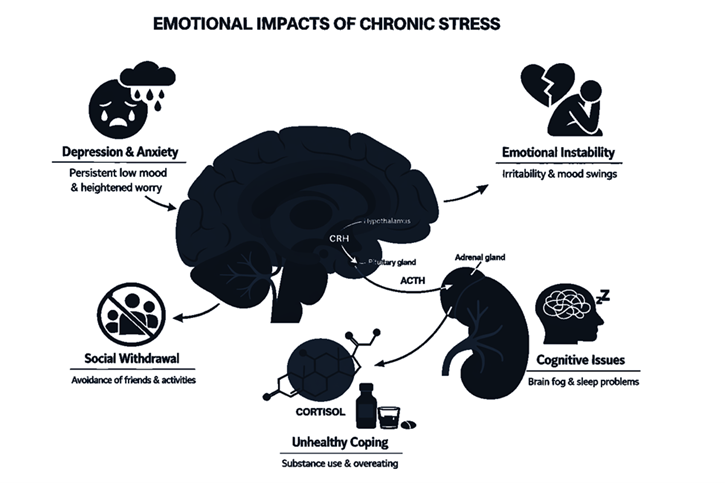
- The Anxiety-Depression Loop: Constant cortisol doesn’t just make you “stressed”; it messes with the neurotransmitters that keep your mood stable. According to research from the American Institute of Stress, this often manifests as a heavy sense of hopelessness or a “waiting for the other shoe to drop” feeling that won’t go away.
- A “Short Fuse” (Emotional Instability): Ever notice you’re snapping at people over things that shouldn’t matter? That’s your brain becoming hyper-reactive. Your “logic center” is being bypassed by a nervous system that is perpetually stuck in fight-or-flight mode.
- The Motivation Drain: You aren’t being “lazy.” Burnout symptoms and the emotional impact of stress often lead to social withdrawal. When your emotional battery is at 1%, isolating yourself or disengaging from your favorite hobbies is often the brain’s way of trying to save energy.
- Cognitive “Brownouts”: This is that dreaded “brain fog.” Because high cortisol can actually impair the hippocampus (your memory hub), you might struggle with long-term stress symptoms like forgetfulness, poor concentration, and a total inability to make simple decisions.
- Maladaptive Shortcuts: When the pressure is too much, it’s human nature to look for the “emergency exit.” This is where we see unhealthy coping behaviors: emotional eating, substance use, or endless scrolling, which might feel like a relief but actually end up fueling the fire.
Physical Symptoms and Effects of Chronic Stress
- Sleep disturbances: trouble falling asleep, waking at 3 a.m. with a racing mind
- Muscle tension that won’t release, especially in the neck, shoulders, or jaw
- Digestive issues: nausea, IBS flare-ups, loss of appetite, or stress-eating
- Frequent colds or infections (hello, immune system suppression)
- Headaches, fatigue, and a general sense of physical depletion
The Link Between Stress and Anxiety or Depression
Is it just stress, or is it something more? The line between stress and mental health disorders is thinner than most people realize. Think of stress as the “trigger” and anxiety or depression as the “result.” When the brain is bathed in stress hormones for too long, it actually changes shape. Research shows that prolonged stress can shrink the prefrontal cortex: the area responsible for memory and learning, while expanding the amygdala. This structural change makes you more susceptible to clinical anxiety.
Essentially, chronic stress effects can unmask underlying vulnerabilities, turning a temporary period of pressure into a long-term mental health challenge.
When Chronic Stress Becomes More Severe
Relying on Substances to Cope
Turning to alcohol, drugs, or large amounts of caffeine to manage stress can sometimes indicate that underlying anxiety isn’t being addressed directly.
Emotional Numbness or Hopelessness
Chronic stress can sometimes lead to feelings of emotional numbness or persistent hopelessness. Individuals may feel disconnected from their emotions or struggle to see positive possibilities for the future.
Withdrawal from Relationships
Ongoing stress may cause individuals to withdraw from friends, family, or social activities. Over time, this isolation can increase feelings of loneliness and make it more difficult to manage emotional challenges.
Thoughts of Self-Harm or Suicide
If thoughts of harming yourself or ending your life appear, even briefly, this is a signal that immediate professional support is essential. Reaching out to a mental health specialist, trusted person, or crisis service can help ensure you’re not facing that moment alone.
The important thing to remember is that needing support isn’t a failure: it’s often the first step toward relief. Anxiety is highly treatable, and many people find that therapy provides tools and perspective that make daily life feel manageable again.
How Therapy Helps Manage Chronic Stress
- Identify Triggers: Understand what is actually causing the “alarm” to go off.
- Develop Coping Skills: Use somatic techniques to lower your cortisol levels in real-time.
- Emotional regulation: Develop emotional regulation skills that help you manage stress more effectively, respond calmly to difficult situations, and navigate challenging emotions.
- Building Resilience: Strengthen your ability to adapt, recover, and move forward during stressful life circumstances.
- Set Boundaries: Learn to say “no” to the external pressures that contribute to burnout symptoms.
When to Seek Additional Support
If stress begins to feel overwhelming or starts affecting your ability to manage daily responsibilities, it may be helpful to seek additional support. Speaking with a mental health professional can provide guidance, coping strategies, and a supportive space to address ongoing stress and emotional challenges.
Crisis Support Resources
- Primary Care Provider: A PCP can rule out physical conditions and provide referrals to specialists.
- Mental Health Professionals: Psychologists, psychiatrists, and clinical social workers provide diagnoses and evidence-based treatments like CBT.
- Immediate Crisis Support:
Final Thoughts
We live in a culture that wears “busy-ness” as a badge of honor, but the chronic stress effects on our hearts and minds are a high price to pay for productivity. Recognizing that your muscle tension or sleep disturbances are actually signals from your body is the first step toward healing.
Don’t wait for a medical crisis to start taking your mental health seriously.
Professional Support
Our practice provides evidence-based therapy to help individuals manage anxiety, chronic stress, and emotional overwhelm. Therapy offers a supportive space to develop coping skills, improve emotional regulation, and regain balance in daily life. Learn more about our Anxiety Therapy, Stress Management Therapy and Life Transitions Therapy services.
If anxiety or stress is affecting your daily life, we invite you to call our office or contact us through our online contact form to schedule a consultation. Our practice provides therapy services for individuals in Brandon, Florida and throughout Florida, including in-person and telehealth appointments.